

The Falling Standards of Education.
- bibisafina5110
- Aug 15, 2022
- 5 min read
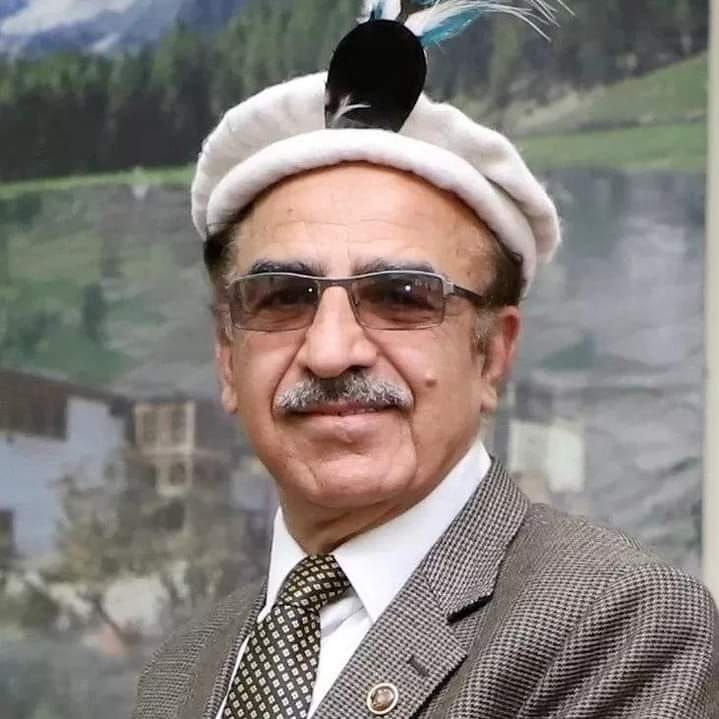
By Prof. Dr Attaullah Shah
The falling standards of education in Govt institutes is reflected in their poor performance in Entry tests recently conducted at NED university. On the other hand the candidates from Cambridge system have over performed by showing 90% plus results. The traditional education in Government institutes is based on rutting and memorizing with no innovative and critical thinking. Students are forced to learn volume of material by heart and sometimes one gets astonished that students securing 99% marks and securing top positions in board exams are even failed in entry tests to secure 50% marks. On the other hand, the Cambridge system of O/A level exams is based more on critical thinking and problem solving. One of the fundamental reasons is also poor capacity of teachers in public sectors. Their knowledge is more static and they are not ready to improve it. The teaching learning methodologies are stuck around the traditional books, exercises and assignments. The outcomes are not well defined. This is also the case in Higher Education Institutes of public sector, where quality teaching remains the least priority. In most of public sector Universities, there is no rigorous teacher education and capacity building process nor the quality assurance processes. The lack of adherence to merit and quality both backwards and forwards in general creates a vicious circle of Garbage In is Garbage Out (GIGO).

This is further devastated by unnecessary litigation by those who lack merit and plus politics in HEIs of public sector. For a university to achieve academic excellence, the following pillars have to be strengthened.
1. Total Quality Management. Meeting or exceeding the requisite standards in all aspects from teaching, learning assessment, students & employees services etc. QEC in general attempts a very small part of it. Continuous Quality Improvement plays pivotal role by benchmarking with some best national and international HEIs.
2. Research based culture: Research and innovation creates culture of inquiry and investigation. When research is focused on the challenges faced by society, it becomes holistic. Though HEC established Offices of Research Innovation and Commercialization (ORICs) but in most cases , these offices couldn't create research culture in HEIs. When dividends of the research are transformed to some new products and services, it is called innovations and as next step, such products are commercialized with the support of industry. Government and society. Unfortunately ORICs in HEIs remained mostly stuck up in Research only. While looking at the quality of research, its relevance and authorship in many cases, questions have been raised on the research conducted at HEIs. Academic dishonesty in the form Guest Author, Ghost Author and Gift Author are very commend. It's never treated like a crime to be part of a paper having no role of such authors. ORICs in HEIs of Pakistan have to reorganize to come to the expectations of nation.
3. Financial sustainability. HEIs by and large are drowning under their own weights. For years and years, these remained employment exchanges for political blue eyed. New Universities were established without any feasibility in most of the cases and to gift the nears and dears with Govt jobs. This has seriously jeopardized the teaching to non teaching ratio. For a good HEI this ratio must be 1:2 to 1:2 at max but in Pakistan it is as high as 1:4 and 1:5. This has made the Employees Related Expenses (ERE) as the largest component of total operating budget. Today for many HEIs in public sector, it has increased to 80% or more of the total budget. This leaves Universities with very little autonomy to spend on research, faculty development, improvement of services, acquisition of new assets etc. For a sustainable financial modle HEIs, need to diversify their resources by creating 30-40% from fee revenue, 20-30% from Govt grants and 20-30% from resesrch dividends, commercialization, royalties etc.
4. Improvement of services: HEIs in public sector are trapped in poor productivity and services. The students related servuces are worst in many cases. Their routine services take months including approvals and notifications etc. The lack of accountability further complicates it. Online students and employees services can improve the performance provided that the staff has enough capacity through rigorous human resource development processes.
5. Politicization of institutes through creating pressure groups and lack of accountability process. One marked difference between public and private HEIs is the lack of accountability. The author has the opportunity to serve in two public sector Universities and one private sector university. The visible accountability through Carrot and stick policy at private sector HEIs created excellence to some extent. The lack of ownership in public sector HEIs, political interference and existence of pressure groups have rendered HEIs more like doomed Public Sector Enterprises +PSE) such as PIA, Pak Railway and Pak Steel Mills in most of the cases. This is further complicated by litigations etc.
6. Poor investment by Governents in higher education. Public investment in higher education is static for at least 5 years. There is no or minimal increase in the grants of Universities whereas in last 4 years the payroll of Universities has been doubled. As a result, today most of the public sector Universities are faced with financial crisis and some of the Universities have been unable to pay the salaries, pension or both. The indiffrence of Governments to Higher Education in Pakistan has left the universities in lurch. There is a need to constitute a Task Force to address this very emerging issue where all Universities are faced with crisis one way the other way. At KIU though we could manage this crisis in last 4 years but due to additional burden of Rs. 150 Million from three new sub campuses of Hunza, Chilas and Ghizer as well as expected increase of 200 Million in Employees Related Expenses, an apparent deficit of 300-400 Million is evident. The non increase of HEC Grant during current year has added fuel to fire. It is feared that University will be in crisis from next month. This leaves us with only option to increase fee exuberantly but this seems next to impossible in places like GB where people are not in a position to pay such increases due to their poor socioeconomic conditions on one hand and lack of priority of higher education on other hand. The average per semester fee of KIU is less than a public schools fee at the moment.

Today HEIs in public sector are generally trapped in vicious circle of low financing, low productivity, poor quality and larger deficits. To move out of this crisis, there is need to develop a comprihinsive plan involving all major internal and external stakeholders particularly faculty staff students and their parents, Government, media and society. An emergency needs to be declared to save Higher Education from real devaststion, as its failure will mean black future for the hundr Fe of million youth of nation which stand at 60% of total population. The notion of "Give 4% to Education to save it from Decca station " has become inevitable.
The author is Vice Chancellor KIU Gilgit


Comments